
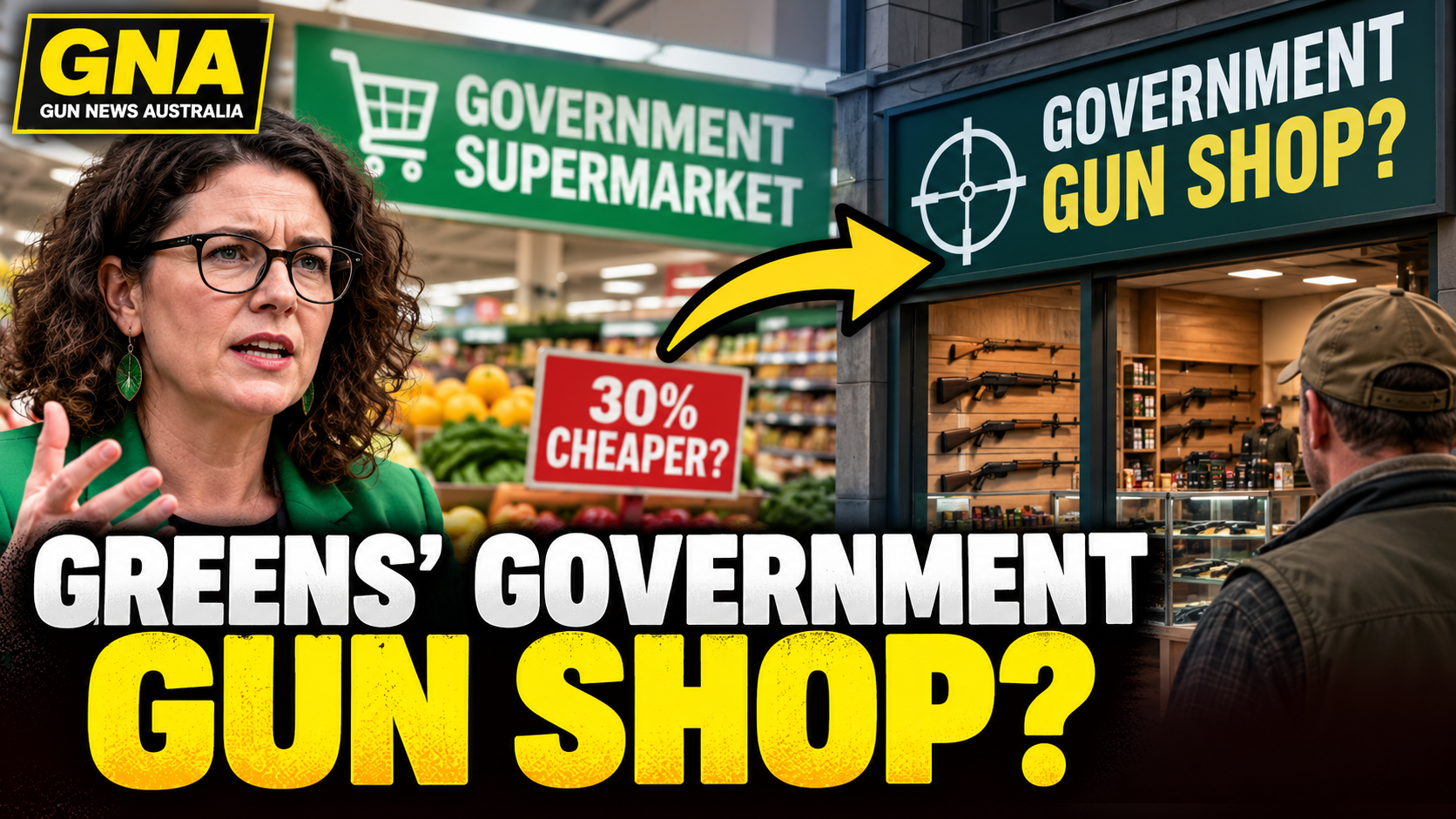
The Victorian Greens want the state government to open ten publicly owned supermarkets, promising cheaper groceries for consumers. But if government ownership can make essential products more affordable, why stop at supermarkets?
What about government-owned gun shops?
It’s a tongue-in-cheek question from Gun News Australia, but behind the humour is a serious issue: what happens when governments decide to enter a market, and how do they demonstrate that taxpayers and consumers will benefit?
What the Greens are proposing
The Victorian Greens have proposed a trial of ten publicly owned supermarkets, with five in metropolitan Melbourne and five in regional Victoria.
They say essential groceries, including bread, milk, eggs, meat, fruit and vegetables, could cost up to 30 per cent less than at major supermarket chains.
The proposal includes $350 million over four years for the trial and expanded government powers to intervene in grocery pricing.
The Greens argue that public ownership and different pricing arrangements could reduce costs and improve affordability.
An ABC report also examined claims that operating costs could be reduced by around 25 per cent, including through savings associated with security guards and CCTV. Those claims warrant scrutiny, particularly when considering how the model would operate in practice.
So why not government gun shops?
The Greens have not proposed government-owned firearms outlets, but we reckon government intervention to reduce the cost of buying what we need by 30 per cent would be a great idea.
Licensed shooters, hunters and target shooters also depend on specialist retail businesses, particularly in regional areas where access to firearms, ammunition, equipment and servicing may be limited.
If a government believes public ownership can improve access and affordability in one market, what principles determine whether the same approach should be considered elsewhere?
Firearms dealers are not supermarkets
There is, of course, a significant difference between selling groceries and operating a firearms dealership.
Firearms dealers must comply with specialised licensing requirements, secure storage obligations, record-keeping rules and other regulatory requirements.
Those obligations impose costs, which ultimately affect the prices customers pay.
A government-owned firearms outlet would still need to satisfy applicable firearms laws and security requirements. It could not simply eliminate essential safeguards to make its products cheaper.
That is precisely why comparisons between different retail industries require more than broad promises about lower prices.
The real questions concern the costs, the operating model, the evidence and the accountability.
A fair test for government proposals
Supporters of publicly owned supermarkets argue that an additional public option could increase competition and help households struggling with grocery bills.
Those are legitimate objectives.
But any proposal involving public expenditure should be accompanied by clear answers.
How much will it cost to establish and operate? Will prices genuinely be lower once all costs are counted? Who bears the financial risk? How will success be measured? And who will be accountable if the scheme fails to deliver?
These questions are not unique to supermarkets or firearms businesses.
They apply whenever a political party proposes using public money to establish a new commercial operation.
GNA has asked the Greens to respond
Gun News Australia has written to the Victorian Greens asking them to consider how the principles behind their supermarket proposal might apply to firearms retailing.
At the time of recording, a response had not been received.
We recognise that the Greens are not proposing government gun shops. The comparison is intended to test the consistency of the arguments for public ownership and greater affordability.
For licensed shooters, the underlying issues are practical: access to ammunition, firearms, servicing, specialist knowledge and affordable equipment.
Those concerns deserve consideration in discussions about regulation, competition and the costs imposed on the shooting community.
The bigger question
The Greens’ supermarket proposal is real. GNA’s government gun shop is fictional.
But the broader question is serious.
When governments promise to make essential products cheaper or more accessible, what evidence supports the promise, who pays for it, and who is accountable for the outcome?
Those are questions worth asking of every political party, regardless of the industry involved.
Watch the full Gun News Australia episode above, and share your thoughts on whether governments should operate retail businesses — and what standards should apply when they do.
For independent coverage of firearms policy, government decisions and their practical effects on licensed shooters, subscribe to Gun News Australia.
